TL;DR: The Bottom Line for Decision Makers
- The Problem: Manual spreadsheet accounting and disconnected systems drain an average of 15 hours per week, leading to data silos, delayed invoicing, and fatal cash flow blind spots.
- The Solution: Adopting cloud accounting software for small business centralizes your financial data, automates data entry, and secures your ledger with bank-grade encryption.
- The ROI: Businesses transitioning to integrated cloud ecosystems cut bookkeeping time by up to 80% and generate complex financial reports in seconds.
- The Verdict: While legacy systems like QuickBooks dominate traditional markets, scaling B2B and e-commerce operators require modern, high-speed solutions like Boklink to achieve true operational and financial synergy.
The Brutal Reality: Spreadsheets Are Bleeding Your Profit Margin
Let’s look at the actual cost of running your business on outdated tech.
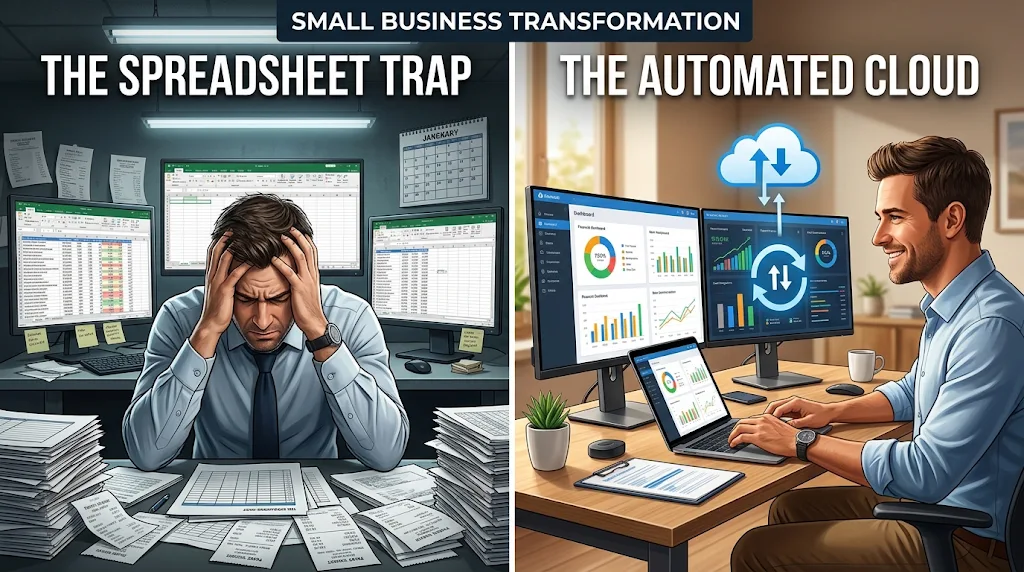
Before the Cloud (The Spreadsheet Trap): It’s month-end close. Your AP/AR (Accounts Payable/Receivable) data is disconnected from your inventory. Your team is manually typing hundreds of invoices into Excel, battling broken formulas and data silos. One manual entry error means your profit and loss statement is skewed by thousands. You are making critical growth decisions based on financial data that is already two weeks out of date.
After the Cloud (The Automated Ecosystem): You open your laptop and instantly view a real-time, vibrant financial dashboard. Overnight, your cloud accounting software automatically imported bank feeds, matched received invoices to shipments, and flagged overdue accounts. What used to take days of agonizing manual labor is now executed automatically in the background.
This is not a luxury upgrade. In 2026, implementing a seamless financial tech stack is a strict requirement for survival.
The 3 Pillars of Modern Cloud Accounting Software for Small Business
Why are high-growth SMEs abandoning traditional desktop software? It comes down to three massive operational advantages:
1. Zero-Lag Financial Visibility (Eliminate Blind Spots)
Desktop systems force you to look at the past. Modern cloud accounting platforms operate in real time. As soon as a transaction clears your bank or a SKU is sold from your warehouse, your master ledger updates. You know exactly what your cash runway is at any given second, allowing you to deploy capital aggressively when opportunities arise.
2. Ecosystem Sync: Breaking the Data Silo
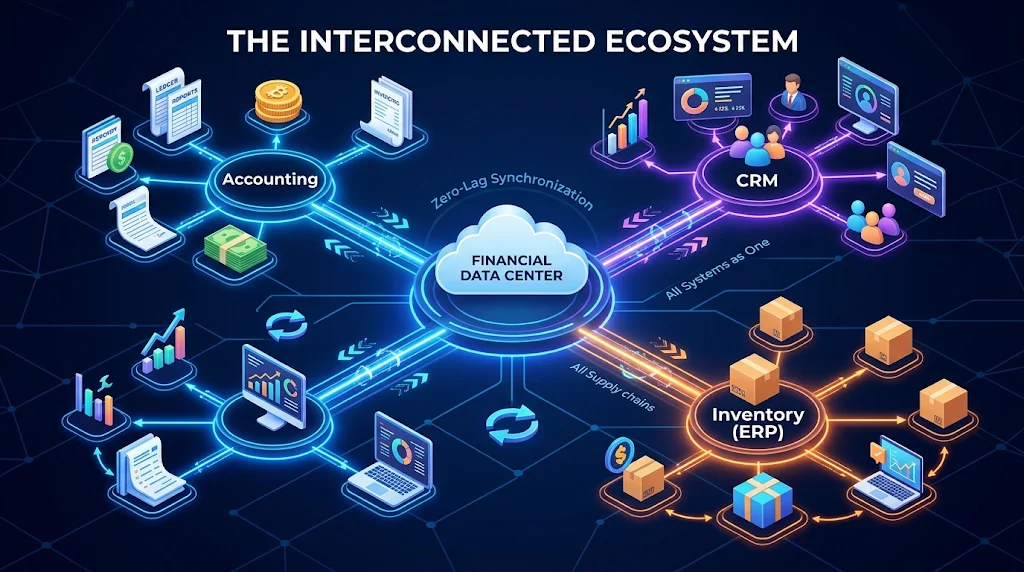
The biggest flaw in legacy accounting is that it exists in a vacuum. Modern cloud solutions bridge the gap between your accounting hub, your CRM, and your inventory management (ERP).
- The Workflow: When a B2B client places an order, the system instantly deducts the raw materials (BOM), updates your SKU count to prevent dead stock, and auto-generates the AR invoice. No double-entry required.
3. Ironclad Security & Anywhere Access
Your hard drive can crash. Cloud data cannot. Top-tier cloud accounting software utilizes AES-256 bank-level encryption bank-level encryption and automated disaster recovery backups. Furthermore, it empowers remote collaboration: your CFO in London and your warehouse manager in Toronto can securely access the same real-time ledger simultaneously.
The 2026 Showdown: Top Cloud Accounting Software for Small Business
Not all cloud platforms are built the same. To help you choose, we’ve broken down the top contenders dominating the market today.
1. Boklink (The Modern SaaS Choice)
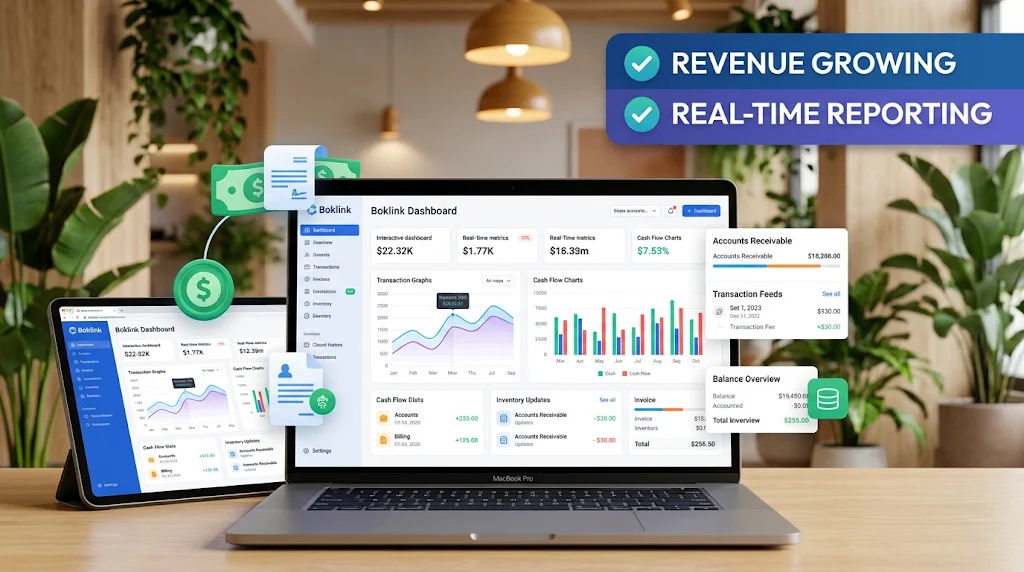
Best for: B2B SMEs, e-commerce brands, and wholesale operators needing integrated inventory and financial automation. Unlike bloated legacy software that requires a degree to navigate, Boklink is engineered with a hyper-intuitive, modern UI. It doesn’t just track your money; it seamlessly merges your accounting with robust ERP and inventory management modules.
- The Edge: Eliminates the friction between sales, inventory, and accounting. With automated invoice generation and high-contrast visual dashboards, you spend less time wrestling with data and more time scaling your operations.
- The Verdict: The ultimate high-speed engine for businesses that outgrow basic bookkeeping.
2. QuickBooks Online (The Legacy Giant)
Best for: Traditional US-based brick-and-mortar stores. QuickBooks is the household name with a massive network of certified accountants.
- The Drawback: It has become notoriously expensive for growing teams (scaling up to $115+/month). Furthermore, its inventory management features are often considered rigid, forcing businesses to pay for expensive third-party add-ons just to manage basic SKU variants.
3. Xero (The Global Alternative)
Best for: Service-based agencies needing multi-user access. Xero is a strong cloud competitor that offers unlimited user access on its core plans, making it great for collaborative teams.
- The Drawback: Their entry-level plans strictly cap your usage (e.g., allowing you to send only 20 invoices a month). If you are a high-volume e-commerce or B2B business, you will be forced into their premium pricing tiers almost immediately.
At-a-Glance Feature Comparison
| Feature | Boklink | QuickBooks Online | Xero |
| Best For | Scaling B2B & E-commerce | Traditional Retail | Service Agencies |
| UI/UX Design | Modern, Fast, Intuitive | Cluttered / Steep Learning Curve | Clean but text-heavy |
| Inventory & ERP Sync | Native & Deeply Integrated | Requires expensive Add-ons | Basic tracking only |
| Pricing Predictability | Highly Scalable | High (Frequent price hikes) | Tiered by invoice limits |
How to Choose the Right Software (A Decision Maker’s Checklist)
Don’t buy software based purely on brand recognition. Evaluate your tech stack using this strict criteria:
- Does it eliminate manual entry? If your team still has to manually type invoice data from an email into the software, the system is failing you.
- Can it handle your operational complexity? If you manage multiple warehouses, complex supply chains, or B2B sales cycles, basic bookkeeping apps will break. You need an integrated Accounting + ERP solution.
- Is the UI built for speed? Time is your most expensive asset. Choose a platform with intuitive navigation that empowers your team to generate reports in seconds, not hours.
Ready to Ditch the Spreadsheets?
Stop letting manual bookkeeping cap your revenue growth. It’s time to upgrade to the best cloud accounting software for small business.It’s time to upgrade to a system that works as fast as you do.
Explore Boklink Accounting Today and Automate Your Financial Growth →